Finding the right metal 3D printer for home use can feel like chasing a sci-fi dream, but in 2026, it is finally a practical reality. However, before you picture a high-powered laser melting titanium on your kitchen counter, you need to understand the current technology.
For most people, the best “metal 3D printer for home” is not a true powder-bed metal printer. The realistic home option is a high-temperature FDM printer that can run metal-filled filament, followed by kiln or outsourced sintering. True in-house metal systems are safer for labs and small businesses than for typical home users, especially if you are evaluating professional SLM metal 3D printers rather than hobby equipment.
This guide breaks down the safest, most affordable, and most effective ways to print real metal parts in your garage or home lab.

Top Picks Desktop Grade Metal 3D Printers in 2026
Are you a weekend hobbyist or running a small business? Use this comparison table to find your ideal pathway.
| Goal / User Type | Recommended Pathway | Estimated Budget | Recommended Hardware |
| Hobbyist / Garage Maker | Metal-Filled Filament + Outsourced Sintering | Under $2,500 | Bambu Lab H2C, Prusa Core One |
| Advanced Prosumer | Metal-Filled Filament + In-House Kiln | $5,000 – $10,000 | FDM Printer + Lab Furnace |
| Advanced Prosumer / Lab | Budget Laser Powder Bed Fusion (LPBF) | Under $30,000 | Matrix SLM120D |
| Lab / Small Business | Bound Metal Deposition (BMD) | $100,000 – $175,000 | Desktop Metal Studio System 2, Markforged Metal X |
| Industrial Production | Large-Format LPBF | $100,000+ | Xact Metal XM200G, One Click Metal MPrint |
Can You Really 3D Print Metal at Home?
Yes, but we need to break a hard truth right now. You must understand the “Home Reality Ladder.”
Industrial Selective Laser Melting (SLM) machines use incredibly fine metal powders. They also use high-powered lasers. This combination traditionally requires explosive-dust management, heavy ventilation, and serious industrial infrastructure.
According to EPA and NIOSH guidance, 3D printers can emit ultrafine particles and VOCs, so they should be used in well-ventilated spaces rather than treated like ordinary bedroom appliances.
Your Actionable Takeaway: Stick to the realistic options. Focus on extrusion-based metal filament printing, new budget-friendly turn-key micro-SLM systems, or office-friendly metal 3D printing systems.
Metal Filament vs. Real Metal Printing: What Is the Difference?
Let’s clear up the confusion. What exactly are you printing with?
Which Desktop Printers Work with Metal-Filled Filament?
Metal filament is essentially standard plastic filament packed heavily with metal powder. To print it, you need a high-temperature consumer or prosumer machine.
- Bambu Lab H2C: This machine is a powerhouse. It features a scorching 350°C nozzle and a 65°C heated chamber, making it ideal for complex engineering materials.
- Prusa Core One: A rock-solid alternative. It boasts a 290°C nozzle, a 120°C bed, and a fully enclosed chamber to prevent warping.
Do You Need a Kiln or Sintering Service?
Yes. Printing the filament only gets you a fragile “green part.”
You then wash away the plastic binders to create a “brown part.” Finally, you bake it in a high-temperature kiln to fuse the metal powder into a “fully dense part.” Metal filaments (like BASF Ultrafuse) absolutely require this post-printing catalytic debinding and high-temperature sintering.

What Is the Best Metal 3D Printer for Home Use?
Finding the best metal 3D printer for home use depends entirely on your workspace and goals. We have broken down the top machines based on realistic pathways.
Whether you need an extrusion-based machine or a budget LPBF 3D printer, these recommendations focus on complete workflows, not just flashy hardware.
Best for the Home Workshop (Metal-Filament)
For standard garages, extrusion-based systems are the safest and most affordable metal 3D printer option available today.
Bambu Lab H2C
The Bambu Lab H2C represents the pinnacle of prosumer multi-material printing. It features a proprietary Vortek hotend system.
This clever design allows for fully automated swapping between nozzles and materials. Crucially, it eliminates the massive filament purge waste seen on older machines.
The H2C boasts a fully enclosed, actively heated chamber, making it incredibly forgiving for dense engineering materials. You can seamlessly print metal filament right alongside standard support interfaces.
However, remember that these “green parts” must still be sent to a third-party service for professional debinding and sintering.
Prusa Core One
Retailing around $1,199, the Core One is a robust, highly reliable workhorse. It features a fully enclosed chamber with active heating up to 55°C.
This active heating is absolutely crucial for printing highly viscous metal filaments consistently without clogging or warping.
The Core One is paired with the new INDX multi-material system, allowing for blazing-fast material switching. It appeals heavily to users who prefer a predictable, highly repairable, open-source ecosystem over a closed-loop environment.
Best Budget True Metal System
If you have a dedicated lab space with proper ventilation, true laser melting is finally accessible to the prosumer market.
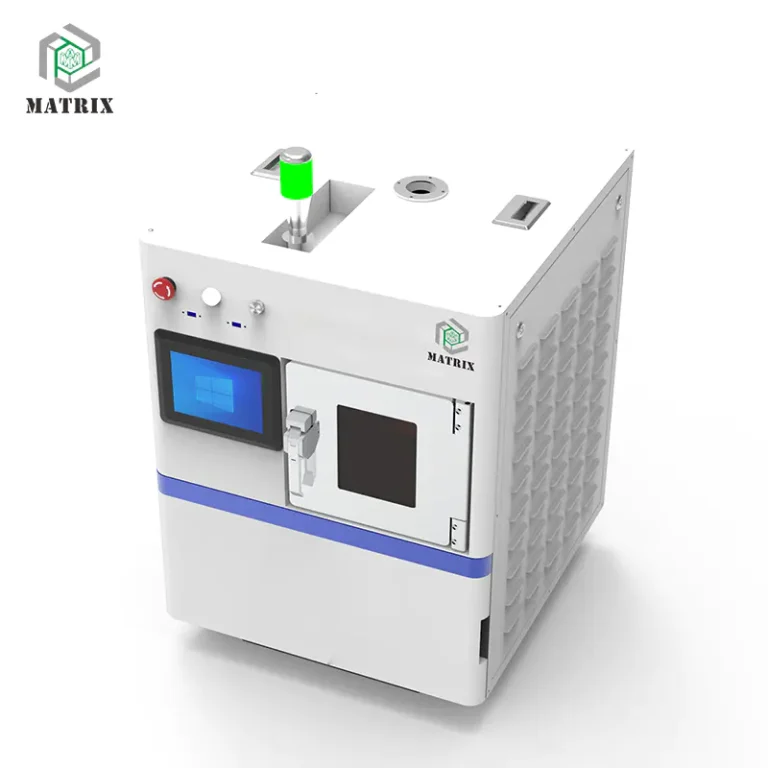
Matrix SLM120D
The Matrix SLM120D is a massive disruption to the traditional $100,000+ industrial market. We easily consider it the best budget metal 3D printer on the market right now.
Priced under $30,000 for a complete system package, it brings true laser melting capabilities directly to serious prosumers and in-house DMLS rapid prototyping teams.
Technical Specs:
- Build Volume: Φ 120 mm × 80 mm
- Laser Power: Powerful 300W or 500W options
- Resolution: High-resolution layer thickness ranging from 30 µm to 120 µm
(If dimensional performance matters more than headline wattage, review typical SLM printer accuracy before you buy.)
The true value of the Matrix SLM120D lies in its bundled post-processing infrastructure. The package includes an electric vibration powder siever, a powder drying oven, and dedicated heat treatment furnaces for alloys like CoCr and Titanium.
It also provides an automatic sawing machine and a nitrogen generator for the protective gas circulation system. This complete, turnkey package effectively eliminates the hidden “add-on” costs that usually bankrupt small buyers.

Best for Office-Safe Labs & Small Businesses
Need high-quality metal parts without the explosive powder risks associated with SLM? Bound Metal Deposition is your safest answer. If you are comparing bound-metal workflows against entry desktop LPBF, see this Metal X vs. SLM-120D comparison.
Desktop Metal Studio System 2
The Studio System 2 is designed explicitly to be an office-friendly metal 3D printing solution for functional prototypes. It offers a generous 300 × 200 × 200 mm build volume and high-end sintering temperatures up to 1400°C.
Its defining feature is the innovative “v.2 materials” library. This upgrade completely eliminates the highly hazardous chemical solvent debinding phase from your workflow.
Instead, your parts move in a seamless, two-step process directly from the printer to the furnace. Everything is easily managed and monitored by their automated Fabricate software.
Markforged Metal X
Built on the specialized Atomic Diffusion Additive Manufacturing (ADAM) process, the Metal X delivers incredible, consistent results. It produces industrial-grade parts with tight layer resolutions of 50 to 125 micrometers.
Unlike Desktop Metal’s streamlined 2-step process, Markforged relies on a strictly controlled 3-step ecosystem: Print, Wash-1, and Sinter.
However, the Metal X truly shines in its support strategy. It utilizes a specialized ceramic release material extruded right between the metal part and its supports. After sintering, you can easily snap off the metal support structures by hand, completely avoiding heavy, expensive machining.

Is Metal 3D Printing Safe in a Home Workshop?
This is the most critical question. Safety is a reality check you cannot ignore.
Can You Print Steel, Titanium, or Aluminum at Home?
It depends entirely on the metal’s state. Welcome to the safety matrix.
- Home-Safe: Stainless steel (like 17-4 PH or 316L) suspended safely in a polymer filament.
- Advanced Lab Safe: Systems like the Matrix SLM120D mitigate powder risks by utilizing an efficient protective gas circulation system and an included nitrogen generator. However, they still require proper ventilation and safe handling.
- Not Home-Safe: Loose Aluminum and Titanium powders without a dedicated industrial infrastructure.
Why? Titanium nanoparticles can be pyrophoric, meaning they can spontaneously ignite in the air. Aluminum dust has a severe explosion hazard index. Worse, applying standard water sprinklers to a metal fire can cause a catastrophic hydrogen explosion.
How Much Does a Home Metal 3D Printing Setup Cost?
Do not just look at the printer’s sticker price. You need to understand the full metal 3D printer cost stack.
- Desktop FDM Route: Printer ($1,000-$2,500) + Hardened Nozzles + Metal Filament ($46 to $150 per kg) + Outsourced Sintering costs per part.
- Budget LPBF Route: Historically impossible, but new turnkey packages like the Matrix SLM120D provide the printer, sieving equipment, and necessary heat treatment furnaces for under $30,000. This fundamentally lowers the barrier to entry for true laser-melted metal.
- Small Business Bound-Metal Route: A full Markforged Metal X system (printer, washer, furnace, installation) ranges from $150,000 to $175,000.
When Should You Outsource Instead of Buying a Machine?
Are you a startup founder iterating parts? You must decide if buying a printer actually beats CNC machining or outsourced DMLS rapid prototyping services. If your part volume is low but your need for speed is high, outsourcing to a service bureau often makes more financial sense than a massive hardware investment.
What Post-Processing Is Required after Printing?
The work does not stop when the printer finishes. The workflow depends on your technology.
For filament and Bound Metal systems:
Unless you are using streamlined materials like Desktop Metal’s v.2, you face a washing and debinding phase. After that, you must run 12-24 hour thermal sintering cycles in a specialized kiln to shrink and fuse the part.
For SLM systems:
First, you must remove the welded part from the metal build plate using tools like the automatic sawing machine included in the Matrix package. Then, you perform necessary metallurgical heat treatments in a furnace, especially for high-stress alloys like Titanium and Cobalt Chromium.
Frequently Asked Questions
The absolute cheapest route is combining a high-temp desktop FDM printer with metal-infused filament like BASF Ultrafuse. You print the part at home and then send it to a 3rd party sintering service to become solid metal.
For ease of use, grab a reliable CoreXY FDM printer like the Bambu Lab P2S or Prusa Core One. Running specialized metal filament through these machines offers the safest, easiest learning curve for beginners.
Not entirely. Metal 3D printing handles complex internal geometries that CNC tools simply cannot reach, but you still need to respect proven minimum wall thickness guidelines. However, CNC machining still provides superior tight tolerances and mirror-like surface finishes without the post-print shrinkage associated with 3D printing.
While highly dense after sintering, filament-based parts often have slight microscopic porosity compared to the near-perfect density of laser-melted parts from SLM machines. That said, they are fully adequate for functional prototypes and tooling.
Yes, for extreme detail without an SLM machine, printing a castable wax resin on an MSLA printer and using traditional investment casting is cheaper. This traditional hybrid workflow consistently yields excellent, professional results.